Let's math out regret...
Rousseau's anxiety

From a Economics function, we boil it down to something really basic. Regret is the payoff you could have had minus the payoff you actually received.
The actual payoff (α) you receive when the state of the world (ω) is…
μ(α,ω)
But we’re humans and want to always throw in hindsight to our decisions…
maxμ(α´,ω)
Now we regret looking for additional changes to our world’s state (emotion, physical)?
R(α,ω) maxμ(α´,ω) - μ(α,ω)
But the world is always random in it’s outcome and if you look at the world with the pessimistic bug nagging you… ω becomes a random distribution of P.
E[R(a)]=∑ωP(ω)(maxu(a′,ω)−u(a,ω))
Expected Regret!
Over time you begin to make changes to how you maximize that utility and hope to avoid the snowballing effects of an accumulation of regrets.
Rτ/T → 0 because T → ∞
Now let’s get away from the math and into some context…

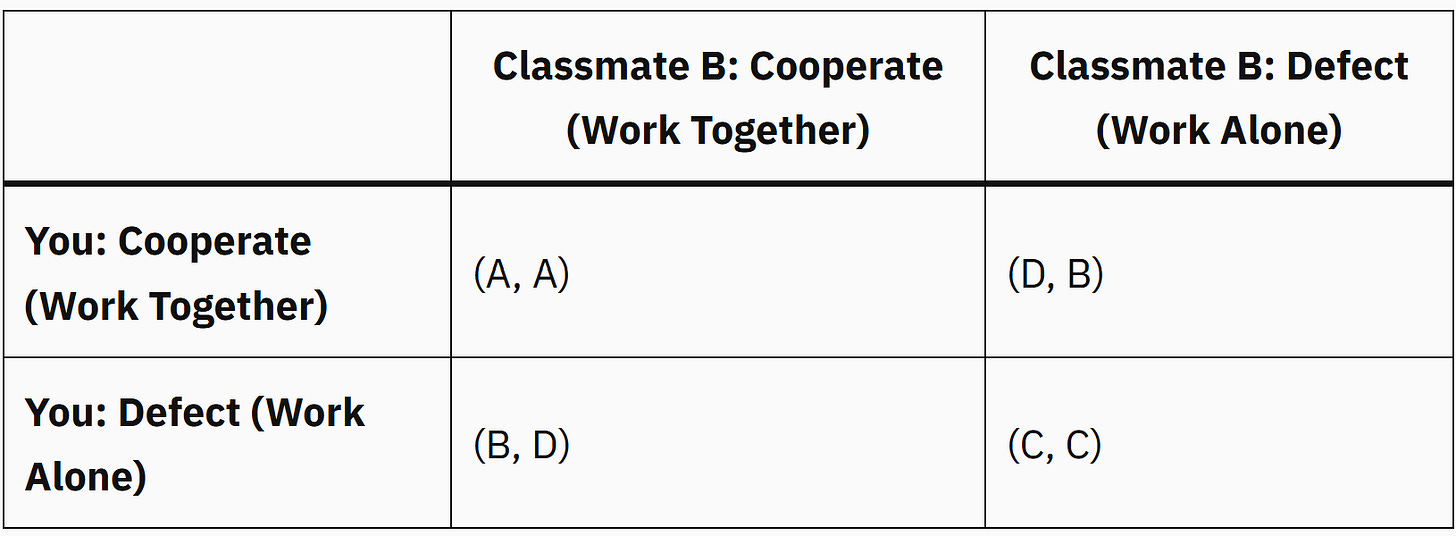
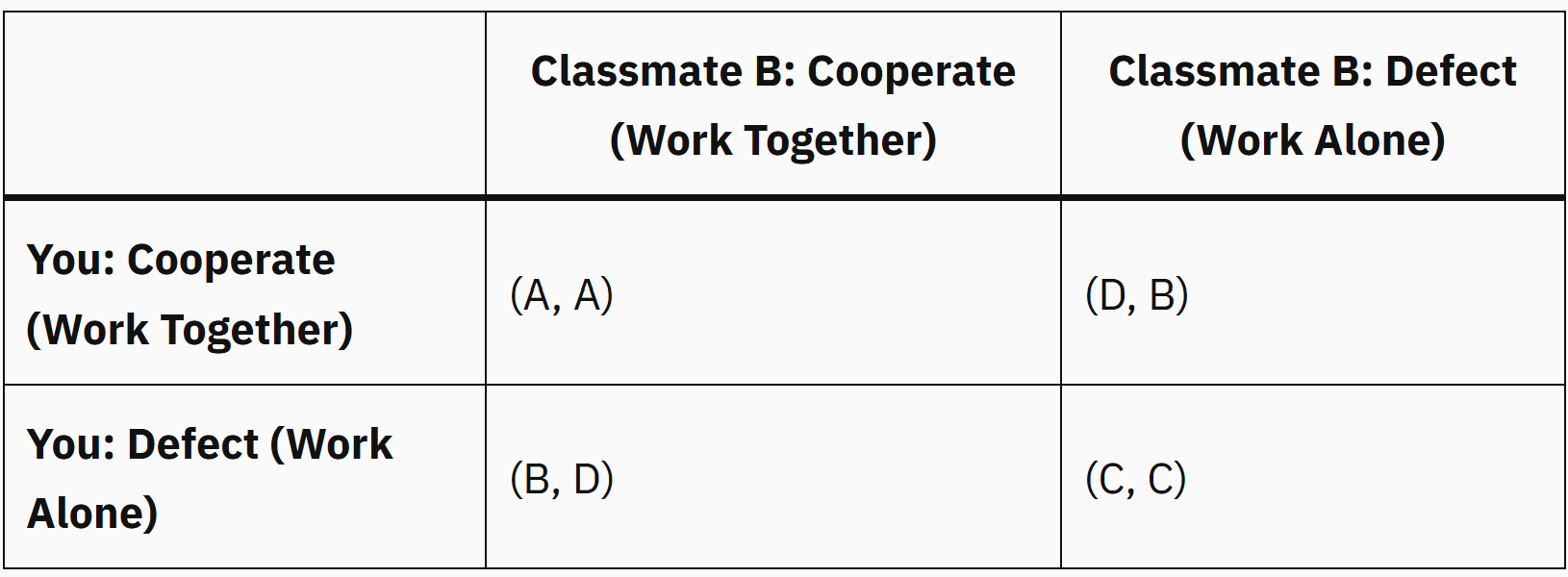
This morning I was reading Dr. A’s Substack about a Prisoner’s Dilemma with regards to the current US vs Iran Conflict. Pop culture sets this as two criminals sitting in opposite interrogation rooms with only the police having specific knowledge of what actions occur independently in each of those rooms.
“Cut a deal now or it could go harder on you when your partner flips”.
Now the best outcome for the criminals is to keep their mouths shut and let the process play it ways out. (This has some variables based on the information available. Cops have a video, might be a good idea to take a deal. Cops have nothing other than rumor and some “thoughts”, silence!)
The Prisoner’s Dilemma depends on bilateral isolation, because:
Each player’s dominant strategy is to defect.
Mutual cooperation is better for both, but unstable.
No external enforcement or intervention exists.
A third party—whether a social movement, regulator, activist group, or even a crowd—breaks this isolation. Once the game is no longer sealed, the payoff becomes endogenous to outside pressure. The players are working independent of any other player and have not been coordinated in advance.
For the players the reward comes from the 1st Person Distortions that follow and introduce regret to their partners.
What happens when there are more than two players and they are acting to maximize their payoff?
Payoff Reweighting (the third party changes incentives)
Movement of any individual towards limiting regret and maximizing an outcome can:
Reward cooperation (e.g., praise, legitimacy, resources)
Punish defection (e.g., boycotts, sanctions, reputational damage)
Change the relative value of outcomes
This converts the Prisoner’s Dilemma into something closer to:
an Assurance game (if rewards for cooperation are strong), like two hunters coordinating their hunt to achieve capturing a greater reward rather than a smaller payout for working individually.
(Rousseau’s Stag Hunt. Feel free to read up on his Discourse on Inequality), or
a Chicken/Hawk–Dove game (if punishments for defection are asymmetric)
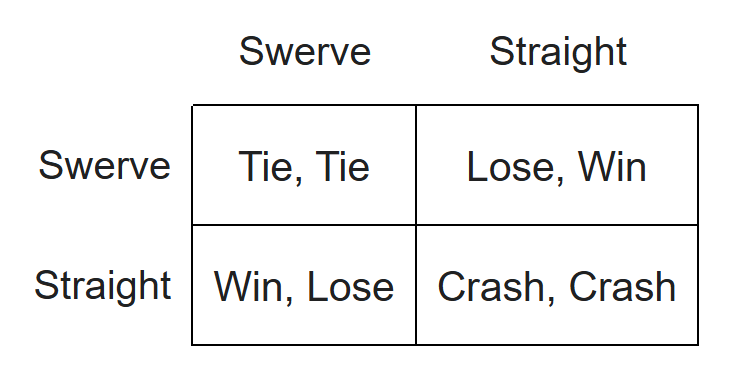
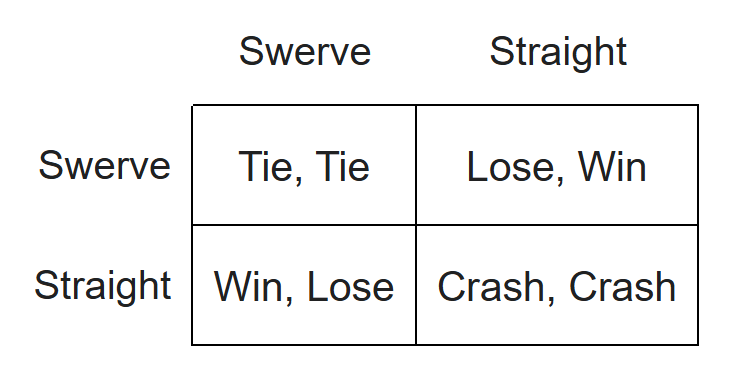
Effect: Defection is no longer dominant; equilibria shift.
Commitment Technology (the third party enforces or enables binding promises)
If the movement can:
enforce norms
create reputational consequences
provide monitoring
…then players can credibly commit to cooperation.
Effect: The Prisoner’s Dilemma becomes a repeated game with enforceable strategies like “grim trigger” (where once a person defects, they will ALWAYS defect), making cooperation stable.
*This doesn’t account for the distortions from 3rd party movement.
ui=f(my action,your action) becomes,
ui=f(my action,your action,third party’s response)
Externalities that you can’t control and may not even be aware of effect the outcome.
In Iran you have 3 parties managing their regret function, a Triadic Game Structure.
Players:
Regime (Reform, Repress)
IRGC (Support, Neutral, Defect)
Public (Mobilize, Quiet)
Each with their own motivations based on one commonality, survival. Yet each also defines “survival” differently. We wrap back to the Regret Function from up top and the distortions that each movement fosters and the reactions created.
Poland, post-Communism, is the 20th largest economy on the planet. They adopted new systems, created a framework for cooperation and found ways to re-integrate their population into the processes built to move forward. All of this since 1993.
There is no tomorrow solution to the Middle East and Iran in specific without all 3 groups recognizing the part each plays in the outcome of the “game”.
This is great. I am traveling for a conference this week. Can I cross post this for the Decode Econ audience?